Table of Contents
This guide examines s110 steel shot compatibility for applications involving fine-scale surface cleaning trials. The review focuses on documented material properties and an application trial, with a clear distinction between an attractive demonstration and evidence that supports the required production result. The following sections address the actual decisions involved in material compatibility: the limiting feature, material and handling conditions, relevant measurements and questions that need a supplier answer before the configuration or supply specification is accepted.
S110 steel shot compatibility: identify the workpiece and next process
Inspect the rib tip and sheltered root separately because they experience different access and impact conditions. Define the exact material family, protected features and downstream finish. Cleaning appearance alone cannot establish freedom from unwanted transfer or residue.
Compare rib tip condition with root cleaning to distinguish overexposure of an open feature from inadequate access below it. For s110 steel shot compatibility, retain the required location-specific results for applications involving fine-scale surface cleaning trials. Use the functional requirement to choose the compatibility checks.
Confirm abrasive material and form
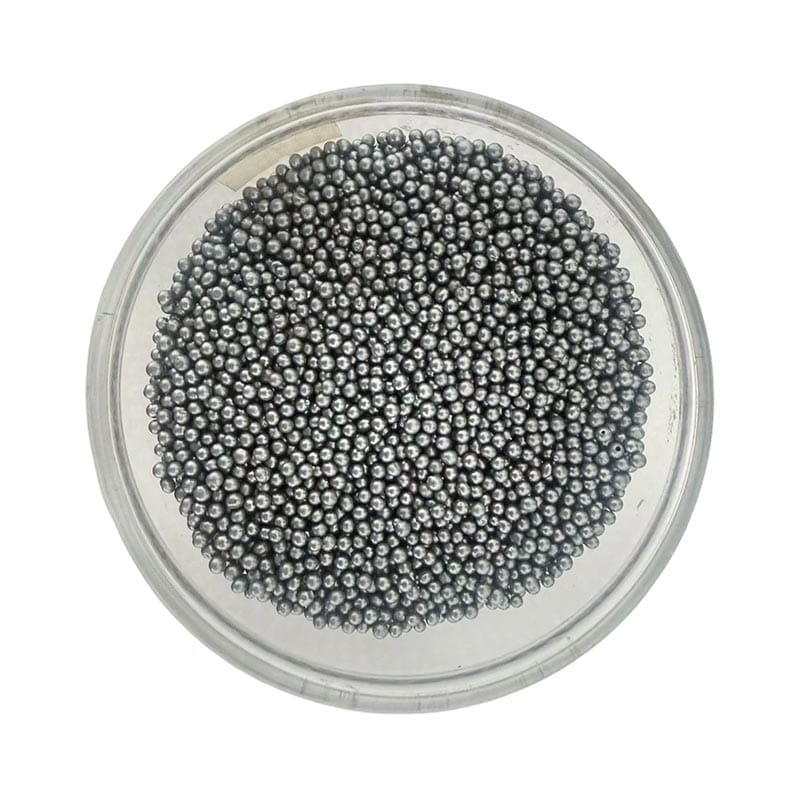
For s110 steel shot compatibility, the grade designation is only one input; hardness and particle condition can change the response of the same thin feature. The S110 nominal-code convention converts to approximately 0.28 mm. This arithmetic is not a measured particle diameter or a full sieve-retention specification. Request the actual alloy, size and particle-condition specification. A broad carbon-steel, stainless or nonferrous description leaves important properties unresolved.
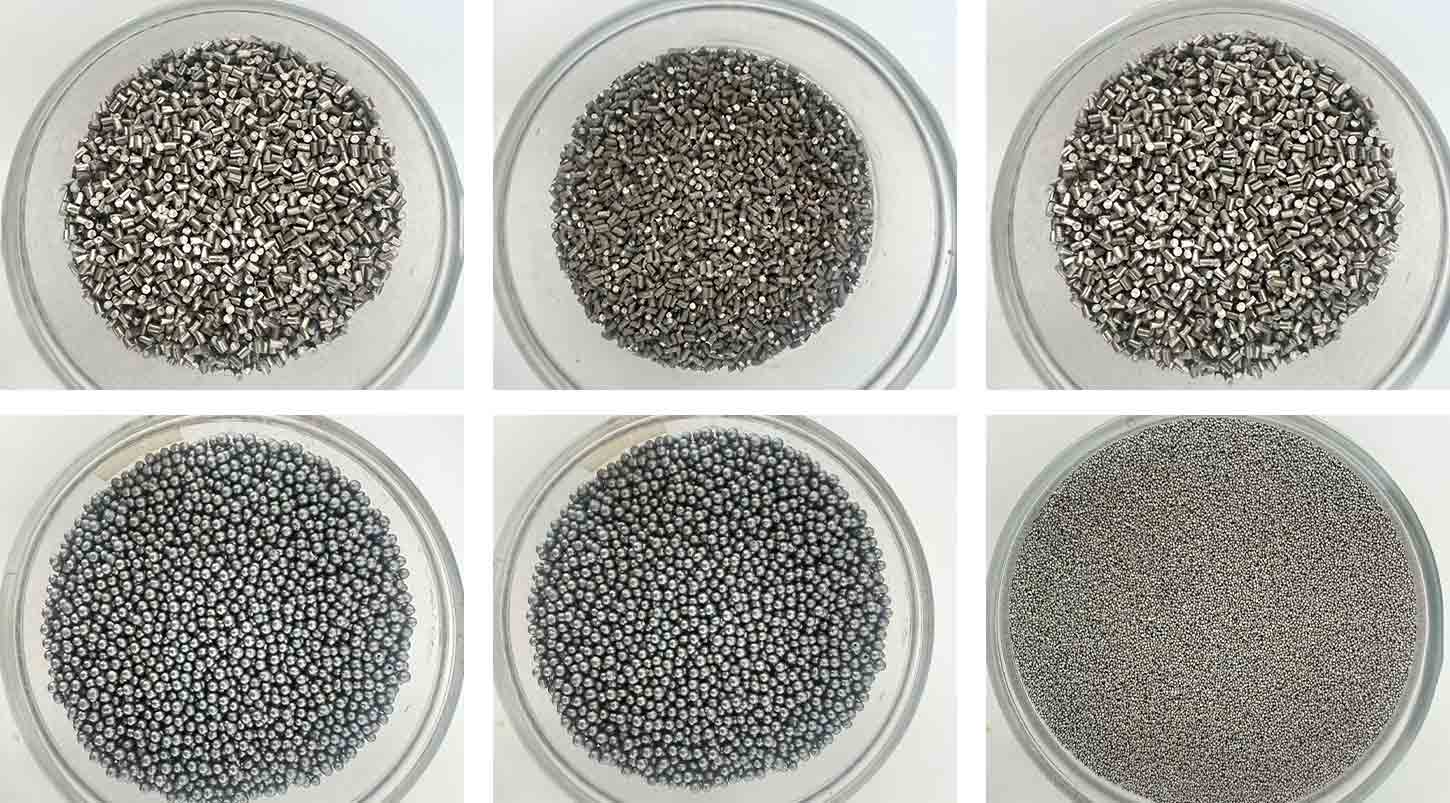
Retain hardness and shape with the sieve data so a changed thin-feature response is not attributed to nominal size alone. Document the accepted material condition used in the s110 steel shot compatibility comparison, including the relevant delivery identity and working state. Keep delivered identity with the representative trial.
Review the shared-equipment history
Sample the working charge after the system stabilizes so a fine-media transition does not distort the result. Consider residue in hoppers, collection corners, separators and handling tools. A new compatible abrasive can be contaminated by material left from a previous process.
Inspect the working mixture after the transition from the previous charge before interpreting a fine-media comparison. Trace usable and rejected material over the same operating boundary when evaluating s110 steel shot compatibility. Define the verification required for a material changeover.
Protect sensitive geometry
A thin-wall casting provides a useful test of whether coverage can be improved without changing a vulnerable rib. Include a thin edge, rib, bore or required appearance face in the sample set. A material may be compatible with the bulk alloy while its impact conditions remain unsuitable for a specific feature.
A thin rib makes support and orientation part of the grade trial, not merely background handling details. The s110 steel shot compatibility review should preserve the limiting application case: two candidate media evaluated on the same representative component. Inspect dimensional and appearance effects separately from cleaning.
Use controlled handling
For s110 steel shot compatibility, keep the casting supported and repeat its orientation when comparing the selected distribution. Segregate approved stock and tools where the process requires it. Record the component family so a shared machine is not assigned a recipe by visual guesswork.
Support the same casting in the same way for each run instead of improving presentation only for the preferred candidate. Show the intended an S110-designated shot grade arrangement in the s110 steel shot compatibility evidence rather than leaving it as an unstated assumption. Prevent handling after blasting from reintroducing incompatible residue.
Assess residues and operating losses
Inspect support and masking condition before attributing a changed edge result to the abrasive alone. Retain evidence of the collected residue and the actual workpiece materials. A soft or reusable abrasive label does not determine waste properties or eliminate a downstream contamination concern.
A worn support or masking contact can move the observed mark without a change in the delivered grade. The s110 steel shot compatibility decision should connect the observed condition with the actual production duty and relevant inspection location. Evaluate the observed material route for the specific application.
Verify by the required method
Retain the untreated rib dimensions and inspect the required finished condition with the specified method. Use the inspection required by the customer or downstream process. Do not replace a required contamination assessment with a photograph or a general supplier assurance.
Use the untreated rib condition and the specified dimensional or appearance method to evaluate the accepted result. The evidence for s110 steel shot compatibility should make documented material properties and an application trial verifiable under the accepted operating condition. Document the tested conditions and the scope of the accepted result.
Confirm application-specific supply
For s110 steel shot compatibility, request the exact grade and a documented trial on the actual alloy and thin geometry. Ask whether the exact grade and form are available and what technical evidence accompanies them. Approval for one alloy or component does not extend to every similar material.
Confirm the precise distribution and the actual alloy duty rather than inferring a universal thin-wall recommendation from the code. For a s110 steel shot compatibility inquiry, confirm the specific supplied configuration or grade and the requirements that remain application-dependent. Keep material availability and technical suitability as distinct confirmations.
A practical decision case for material compatibility
Consider two candidate media evaluated on the same representative component as a trial case. It is an application example, not a claim that a particular installation has produced a measured result. Start by asking what evidence would answer the first decision: identify the workpiece and next process. Inspect the rib tip and sheltered root separately because they experience different access and impact conditions. The comparison should preserve the normal incoming condition and the important configuration details, so a favorable observation cannot be explained merely by using an easier workpiece or a cleaner temporary setup.
Now compare an attractive superficial result with the actual acceptance question. Request the exact grade and a documented trial on the actual alloy and thin geometry. Keep material availability and technical suitability as distinct confirmations. For fine-scale surface cleaning trials, the final review should show how documented material properties and an application trial was addressed. If the limiting feature fails, preserve the failure and the authorized adjustment rather than combining exploratory settings with the successful result. This gives the production or purchasing team a repeatable decision instead of a general assurance that the product family is suitable.
Comparison of useful and incomplete evidence
| Review item | Useful evidence | Incomplete basis |
|---|---|---|
| Identify the workpiece and next process | Inspect the rib tip and sheltered root separately because they experience different access and impact conditions. Use the functional requirement to choose the compatibility checks. | A general statement without the relevant application condition, measurement or configuration. |
| Review the shared-equipment history | Sample the working charge after the system stabilizes so a fine-media transition does not distort the result. Define the verification required for a material changeover. | A general statement without the relevant application condition, measurement or configuration. |
| Use controlled handling | Keep the casting supported and repeat its orientation when comparing the selected distribution. Prevent handling after blasting from reintroducing incompatible residue. | A general statement without the relevant application condition, measurement or configuration. |
| Verify by the required method | Retain the untreated rib dimensions and inspect the required finished condition with the specified method. Document the tested conditions and the scope of the accepted result. | A general statement without the relevant application condition, measurement or configuration. |
For relevant background, consult Wikipedia’s overview of abrasive blasting. The background reference explains abrasive-cleaning terminology. It is not a product certificate or an application acceptance report.
Discuss the application with Dazheng
Use the Steel Shot information to start the inquiry. Send the material, drawing, incoming condition, required result and production duty for fine-scale surface cleaning trials. Explain the limiting case: two candidate media evaluated on the same representative component. Ask how documented material properties and an application trial will be verified. Confirm exact configuration or material availability, utilities, support scope and acceptance evidence before treating a general listing as a complete proposal.
Frequently asked questions
What should be specified first for s110 steel shot compatibility?
Define the exact material family, protected features and downstream finish. Cleaning appearance alone cannot establish freedom from unwanted transfer or residue. Inspect the rib tip and sheltered root separately because they experience different access and impact conditions.
Which evidence matters most when reviewing s110 steel shot compatibility?
Define the verification required for a material changeover. Sample the working charge after the system stabilizes so a fine-media transition does not distort the result.
Can a catalogue description settle a s110 steel shot compatibility decision?
A catalogue identifies a product family. Request the exact grade and a documented trial on the actual alloy and thin geometry. Ask for the exact configuration or material confirmation and the agreed application evidence.
How should a changed s110 steel shot arrangement be checked?
Retain the untreated rib dimensions and inspect the required finished condition with the specified method. Keep the change, operating conditions and required acceptance results traceable before extending approval.
What belongs in the technical inquiry for s110 steel shot compatibility?
Provide the component material, dimensions, incoming condition, required result and production duty. Keep material availability and technical suitability as distinct confirmations. Include drawings or photographs of the limiting feature.