Table of Contents
Introduction
Different metal components cannot be cleaned efficiently with the same blasting configuration. A batch of small castings, a large welded frame, a long steel beam, and a continuous stream of flat components all require different methods of moving and exposing the workpiece to abrasive media. This is why understanding the main types of shot blasting machine is essential before selecting industrial surface-treatment equipment.
Although most wheel-blasting systems use the same basic principle—accelerating metallic abrasive with a high-speed blast wheel—the way a machine holds, rotates, tumbles, or transports the workpiece can be completely different. This handling method has a direct effect on cleaning coverage, production capacity, component protection, automation potential, and maintenance requirements.
For industrial users, machine selection should therefore begin with the workpiece rather than with motor power or chamber size alone. This guide explains the principal types of shot blasting machine used for metal cleaning and shows how crawler, hook, pass-through, overhead conveyor, and mesh belt systems differ in practical applications.
Why Shot Blasting Machines Use Different Designs
The main reason different machines exist is workpiece movement.
A blast wheel creates an abrasive stream within a defined blasting zone. To clean the complete surface effectively, the workpiece must move through that zone in a controlled way. Some parts can tumble freely, while others need to remain suspended or supported. Long steel sections may need continuous linear movement, whereas delicate components may require individual positioning.
Five factors usually determine the most appropriate machine structure: workpiece size, individual weight, geometry, resistance to collision, and production flow.
Small robust castings can often be processed in batches. Large fabricated components may need hooks. Beams and plates are better suited to pass-through systems. Components requiring continuous but supported transport may be more suitable for mesh belt equipment.
The differences between the major types of shot blasting machine can therefore be understood primarily through their workpiece-handling systems.
| Machine Type | Workpiece Movement | Typical Workpiece Characteristic | Production Style |
|---|---|---|---|
| Crawler type | Tumbling | Small to medium robust parts | Batch |
| Hook type | Suspended rotation | Larger or irregular parts | Batch |
| Pass-through type | Linear conveyor movement | Long or continuous workpieces | Continuous |
| Overhead conveyor type | Suspended conveyor movement | Hanging components in production lines | Continuous |
| Mesh belt type | Supported belt movement | Parts requiring continuous stable transport | Continuous |
Crawler Type Shot Blasting Machine
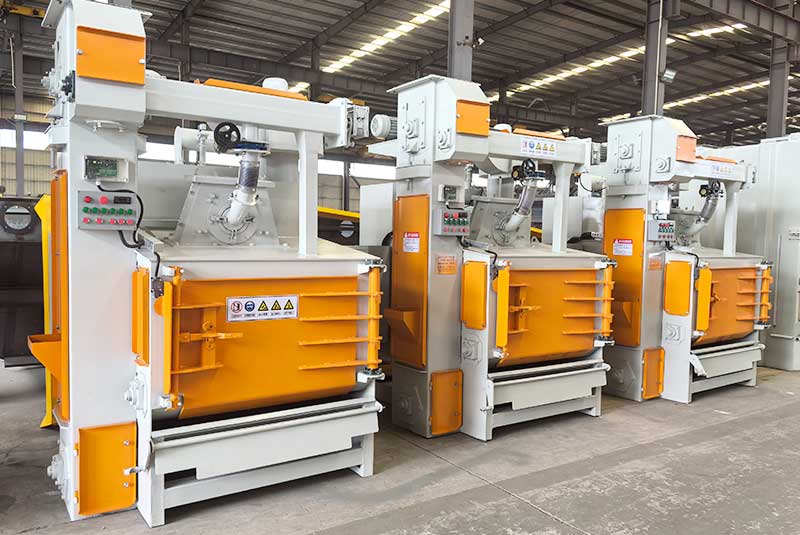
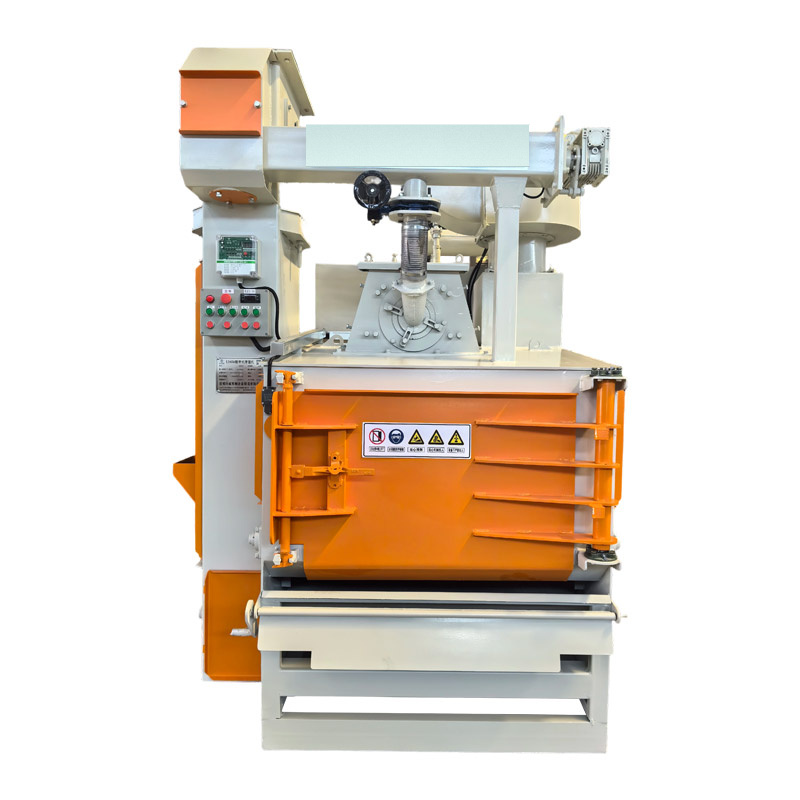
Crawler equipment is one of the most common batch-processing configurations among the different types of shot blasting machine.
The workpieces are placed inside a blasting chamber equipped with a moving crawler or tumble belt. As the belt rotates, suitable parts continuously roll and tumble. This movement repeatedly presents different surfaces to the abrasive stream without requiring each component to be positioned individually.
A crawler-type shot blasting machine is particularly suitable when many relatively compact components need to be cleaned in batches. Typical applications can include castings, forgings, metal hardware, machined blanks, and other components capable of tolerating contact with neighboring parts.
The primary advantage of the design is comprehensive surface exposure. Parts continually change orientation during blasting, allowing one or more blast wheels to reach different faces throughout the cycle.
However, workpiece compatibility is important. Thin, fragile, extremely long, or easily damaged components may not be suitable because the parts contact each other while tumbling.
Key Advantages of Crawler Systems
Crawler machines combine batch loading with automatic workpiece movement. Operators do not need to rotate each component manually, and the tumbling action helps create relatively uniform exposure.
They are especially useful where production involves repeated batches of similar metal parts.
Machine selection should still consider individual part weight, total loading capacity, component geometry, belt material, blast wheel arrangement, abrasive flow, and unloading requirements. Filling the chamber beyond its effective capacity can restrict movement and create uneven cleaning.
Hook Type Shot Blasting Machine
Hook systems solve a very different handling problem.
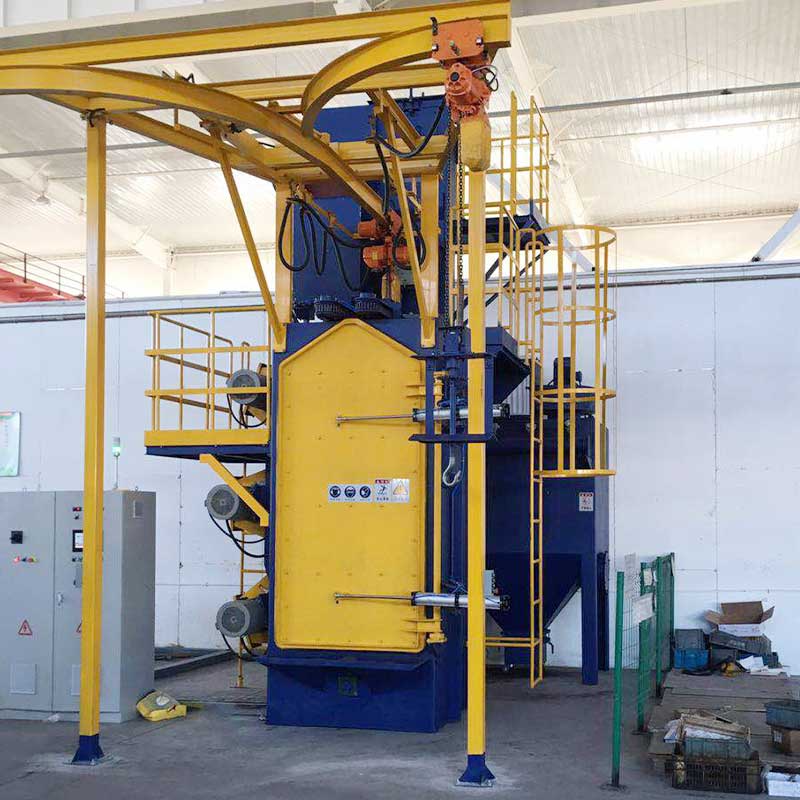
Instead of placing components in a tumbling chamber, the workpiece is suspended from a hook. The hook moves the component into the blasting chamber and normally rotates it during treatment so multiple surfaces pass through the abrasive stream.
A hook-type shot blasting machine is suitable for components that should not tumble against each other. This can include larger castings, fabricated steel parts, welded assemblies, machinery components, and irregular workpieces that require individual handling.
The suspended arrangement provides more control over workpiece orientation and prevents the collision associated with crawler systems.
For heavy or geometrically complex components, this can be a significant advantage.
Single-Hook and Double-Hook Arrangements
Hook-type equipment can use different handling arrangements depending on the required production rhythm.
A single-hook configuration processes one suspended load through the blasting cycle. In a double-hook arrangement, loading and unloading can be organized more efficiently because one hook may be prepared while another load is undergoing treatment.
The appropriate configuration depends on workpiece weight, loading method, blasting time, crane access, production frequency, and available floor space.
For buyers comparing types of shot blasting machine, the distinction between crawler and hook equipment is therefore straightforward: crawler systems rely on tumbling, while hook systems rely on suspension and rotation.
Pass-Through Shot Blasting Machine
Pass-through equipment is designed for workpieces that move continuously through a blasting chamber rather than remaining inside it for a fixed batch cycle.
This configuration is useful for steel materials with predictable dimensions and linear movement requirements. Workpieces enter through one side of the machine, travel through the blast zone, and exit from the opposite side.
Multiple blast wheels can be positioned around the chamber to expose top, bottom, side, or angled surfaces depending on the equipment design.
Pass-through machines can integrate efficiently with material-handling systems, making them particularly useful where blasting is one stage in a larger production sequence.
Instead of repeatedly loading and unloading a closed batch chamber, workpieces can travel through surface preparation before moving into painting, coating, fabrication, or further processing.
Roller Conveyor Shot Blasting Systems
Roller conveyor equipment is an important pass-through configuration.
Steel plates, profiles, beams, structural sections, and fabricated components are transported through the machine on powered rollers. As the material enters the chamber, strategically positioned blast wheels direct abrasive toward exposed surfaces.
This configuration offers a major advantage for long workpieces that cannot practically tumble or hang from a compact hook system.
Because the workpiece travels in a predictable straight path, cleaning intensity can be influenced by conveyor speed, blast wheel arrangement, abrasive flow, and the number of blasting zones.
A slower conveyor speed generally increases exposure time, while faster movement supports higher throughput when the initial surface condition allows it.
The correct operating speed should be determined by the required cleaning result rather than production speed alone.
Overhead Conveyor Shot Blasting Machine
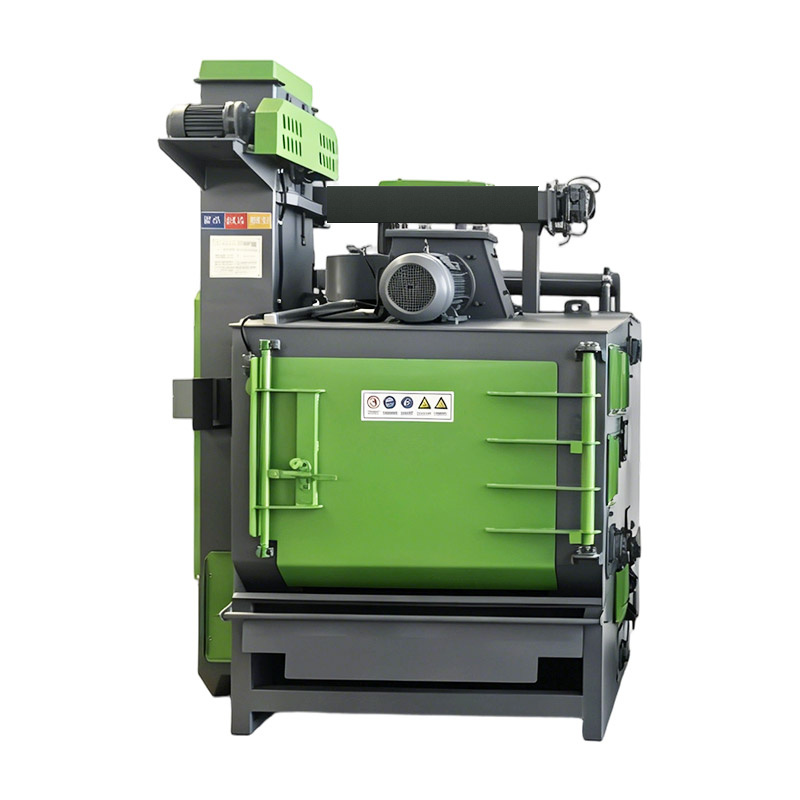
An overhead conveyor machine combines suspended workpiece handling with continuous production.
Instead of processing one stationary hook load at a time, components are attached to an overhead conveying system that moves them through the blasting area. Depending on machine design, workpieces may rotate while traveling through the chamber to improve abrasive coverage.
This type of system can be useful where hanging components already move through multiple production stages.
The major distinction from a conventional hook machine is workflow. Hook equipment normally operates in defined batch cycles, while an overhead conveyor configuration can form part of a continuous material-handling line.
When evaluating these types of shot blasting machine, manufacturers should consider whether their production environment benefits more from flexible batch processing or a fixed continuous flow.
Mesh Belt Shot Blasting Machine
Mesh belt machines support components on a moving belt as they pass through the blasting area.
Unlike crawler equipment, the belt is primarily used to transport workpieces rather than tumble them. This allows components to maintain a more controlled position during the process.
The open structure of the mesh can help abrasive pass through the supporting surface while the workpiece moves through the machine. Blast wheels can be positioned according to the required treatment area and component geometry.
Mesh belt equipment can be useful for production where components need continuous processing but are not suitable for aggressive tumbling.
Workpiece dimensions, contact surfaces, belt loading, blast coverage, and the possibility of abrasive carryout should all be evaluated before selecting this configuration.
Batch Shot Blasting vs Continuous Shot Blasting
A useful way to understand types of shot blasting machine is to divide them into batch and continuous systems.
Crawler and many hook machines operate as batch systems. A defined quantity of workpieces is loaded, the blasting cycle is completed, and the parts are then unloaded.
Batch systems offer flexibility because operators can process different components in separate cycles and adjust blasting conditions accordingly.
Pass-through, roller conveyor, overhead conveyor, and mesh belt equipment are more closely associated with continuous processing. Workpieces move into and out of the blasting area in an ongoing flow.
Continuous systems can provide high productivity when part dimensions and production requirements are relatively standardized. However, they normally require more consideration of upstream and downstream material handling.
The better approach depends on actual production organization rather than assuming continuous equipment is automatically superior.
Comparing the Main Types of Shot Blasting Machine
Selecting between machine types becomes easier when each configuration is compared according to workpiece handling.
| Selection Factor | Crawler | Hook | Roller/Pass-Through | Overhead Conveyor | Mesh Belt |
|---|---|---|---|---|---|
| Batch processing | Excellent | Excellent | Limited | Limited | Limited |
| Continuous production | Limited | Limited | Excellent | Excellent | Excellent |
| Tumbling components | Excellent | No | No | No | No |
| Collision-sensitive parts | Limited | Good | Good | Good | Good |
| Long steel sections | Poor | Limited | Excellent | Limited | Limited |
| Irregular large parts | Limited | Excellent | Depends on size | Good | Depends on size |
| Production-line integration | Moderate | Moderate | Excellent | Excellent | Excellent |
This comparison should be treated as a general selection framework rather than a fixed equipment specification. Actual machine capability depends on model configuration and workpiece requirements.
Workpiece Size and Weight
The first technical information needed for machine selection is the maximum workpiece size and weight.
A machine chamber must provide enough clearance for safe movement while the handling system must support the expected load. For batch machines, both individual component weight and total batch weight are important.
Large dimensions do not automatically mean that a hook machine is required. A long plate, for example, may be far better suited to a roller conveyor even if its total weight is substantial.
Geometry also matters. A component with deep recesses, internal cavities, complex welded features, or overlapping surfaces may require careful blast wheel positioning and workpiece rotation.
For this reason, workpiece drawings and representative component dimensions are more useful for equipment selection than broad descriptions such as “large parts” or “steel products.”
Workpiece Collision and Surface Protection
Whether components can safely touch each other is another important dividing line between types of shot blasting machine.
Crawler systems deliberately create contact between parts as they tumble. This is effective for robust components but may be unsuitable for workpieces with easily damaged edges, thin sections, machined surfaces, or geometries that can become entangled.
Suspended or conveyor-based systems keep parts more controlled.
Hook equipment separates a large component from other workpieces, while roller and mesh conveyor systems maintain a defined transport path.
Before selecting equipment, manufacturers should therefore evaluate not only whether a machine can physically hold the component but also whether the handling method is compatible with the required post-blasting condition.
Production Capacity and Automation
Production capacity should be evaluated through the complete cycle rather than through blasting time alone.
For batch equipment, loading, blasting, unloading, and preparation for the next batch all contribute to total cycle time. Automated loading or unloading can improve productivity when component geometry and production volume justify it.
Continuous systems use a different capacity calculation. Conveyor speed, workpiece spacing, machine opening dimensions, abrasive coverage, and upstream handling determine practical throughput.
Automation can also include conveyor control, workpiece detection, abrasive flow management, dust collection interlocks, and integration with surrounding production equipment.
The most automated machine is not necessarily the most suitable one. Automation should correspond to production consistency, labor requirements, component variety, and the expected operating environment.
Blast Wheel Arrangement
Different types of shot blasting machine may use different quantities and positions of blast wheels.
The objective is to direct sufficient abrasive toward all surfaces requiring treatment.
In crawler equipment, workpiece tumbling allows components to repeatedly enter the abrasive pattern. A hook machine relies more heavily on controlled rotation. Pass-through equipment may require multiple wheels positioned around the transport path because the workpiece maintains a more predictable orientation.
Wheel quantity alone should therefore not be used as a direct measure of machine performance.
The direction, power, abrasive flow, blast pattern, and relationship between the wheels and workpiece movement are more meaningful.
Poorly positioned blast wheels can leave untreated zones even when total installed power appears high.
Abrasive Recovery and Dust Collection
Regardless of machine type, wheel-blasting equipment requires effective abrasive circulation.
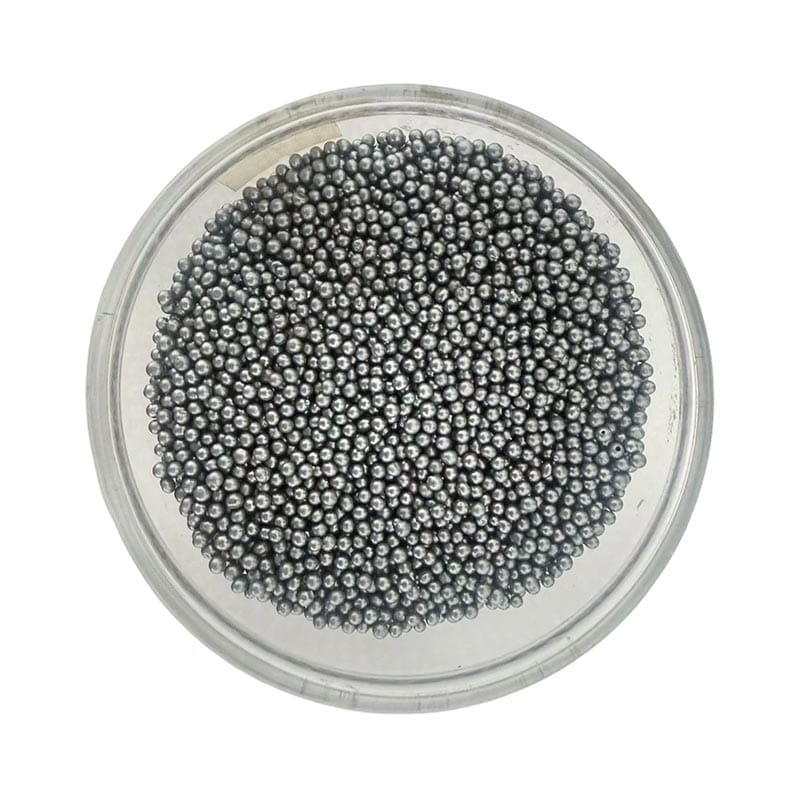
Used abrasive falls from the blasting zone and is transported to a separation system. Reusable media returns to the machine, while dust, broken particles, scale, and other contaminants are removed.
Dust collection operates alongside this circulation system by extracting fine airborne particles.
The general technology belongs to the broader family of abrasive blasting processes, in which abrasive material is propelled against a surface to alter or clean it.
For industrial wheel blasting, reliable abrasive recovery is particularly important because continuous media reuse is fundamental to stable operation.
When comparing equipment, separator capacity, abrasive recovery design, dust extraction, filter access, and wear protection deserve as much attention as the visible blasting chamber.
Machine Selection Based on Application
A practical selection process begins by grouping workpieces according to how they can be handled.
Compact metal components capable of tumbling can be evaluated for crawler equipment. Larger irregular components that need independent support can be evaluated for hook machines.
Long plates, beams, and profiles naturally point toward roller conveyor or pass-through configurations. Hanging components moving through repetitive manufacturing stages may fit overhead conveyor equipment, while parts requiring stable continuous belt transport may suit mesh belt systems.
The required surface condition must then be defined. Rust removal, mill-scale removal, casting cleaning, and preparation before coating can involve different abrasive and operating requirements.
Finally, production volume, loading method, available factory space, material flow, maintenance access, and dust collection requirements should be incorporated into the decision.
Common Selection Mistakes
One common mistake is selecting a machine primarily by chamber dimensions. A workpiece may physically fit inside the chamber while still being unsuitable for the machine’s handling method or blast pattern.
Another mistake is focusing only on installed motor power. Higher power cannot compensate for poor abrasive coverage or incorrect workpiece movement.
Production capacity can also be misunderstood. A machine with a fast blasting cycle may still create a bottleneck if loading and unloading require excessive manual handling.
Buyers should also avoid treating every metal component as suitable for tumbling. Collision-sensitive parts may require suspended or supported transport even when their dimensions would fit inside a crawler machine.
Maintenance accessibility is another frequently overlooked issue. Blast wheels, liners, conveyors, elevators, separators, and filters are wear-related components that require inspection and servicing throughout the equipment’s operating life.
Building a Practical Machine Selection Checklist
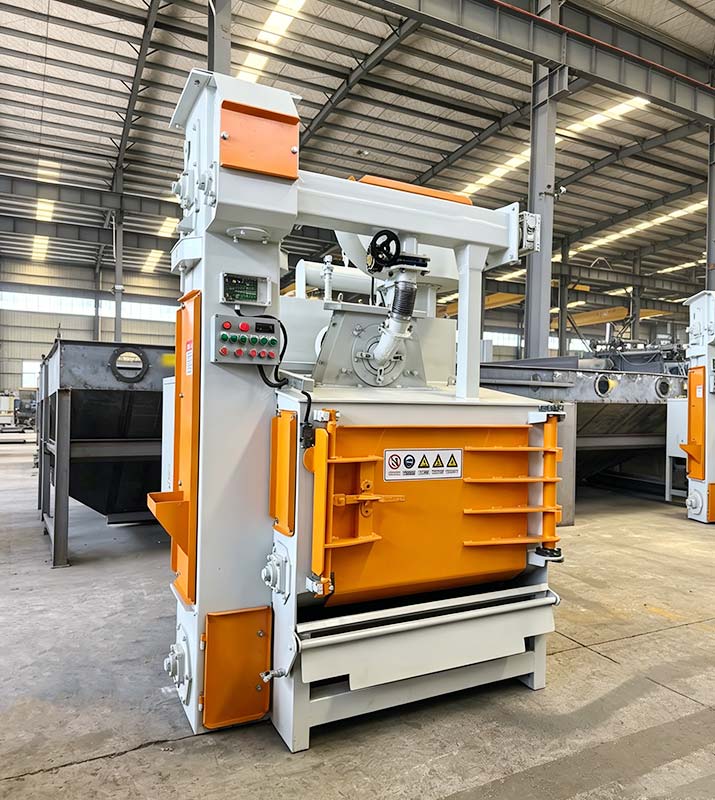
Before comparing specific equipment configurations, manufacturers should prepare a clear description of their production requirements.
This should include minimum and maximum workpiece dimensions, individual weight, expected batch weight or hourly throughput, material type, initial surface condition, required surface result, and whether components can safely contact one another.
The preferred loading and unloading method should also be identified. Factory layout, crane access, conveyor connections, available installation space, and production-line integration can influence the practical machine configuration.
Abrasive selection, dust extraction requirements, maintenance access, and expected operating hours should then be considered.
With this information available, the differences between types of shot blasting machine become much easier to evaluate objectively.
Conclusion
The main types of shot blasting machine differ less in their basic blasting mechanism than in the way they handle the workpiece.
Crawler machines tumble robust components in batches. Hook machines suspend and rotate larger or collision-sensitive parts. Pass-through and roller conveyor systems move long materials continuously through blasting zones. Overhead conveyor machines integrate suspended components into continuous production, while mesh belt systems provide stable belt-supported transport.
Selecting the correct configuration therefore requires more than comparing machine size or blast wheel power. Workpiece geometry, weight, collision sensitivity, production volume, surface requirements, loading method, abrasive recovery, dust extraction, and factory workflow all need to be considered together.
Matching the handling method to the actual workpiece is the foundation for consistent surface coverage, efficient production, and reliable long-term operation.
FAQ
Which types of shot blasting machine are commonly used in industrial production?
Common configurations include crawler, hook, pass-through or roller conveyor, overhead conveyor, and mesh belt machines. Their main difference is how the workpiece moves through the blast zone. The appropriate configuration depends on part size, weight, geometry, production volume, and whether components can safely tumble together.
What is the difference between crawler and hook shot blasting machines?
Crawler machines tumble suitable components together on a moving belt, making them effective for batches of robust parts. Hook machines suspend and rotate workpieces individually, making them more suitable for larger, irregular, heavier, or collision-sensitive components that should not repeatedly contact neighboring parts.
Which shot blasting machine is suitable for steel plates and beams?
Roller conveyor or pass-through equipment is generally suitable for plates, beams, profiles, and other elongated steel workpieces. The material travels through a blasting chamber while multiple blast wheels treat exposed surfaces. Conveyor speed and wheel arrangement can then be adjusted according to the required cleaning result.
How should production volume influence shot blasting machine selection?
Batch machines are flexible when production includes different component groups, while continuous conveyor systems are useful for standardized high-throughput processing. Capacity should include loading, blasting, unloading, workpiece spacing, conveyor speed, and material handling rather than being evaluated from blasting time alone.
What information is needed before selecting a shot blasting machine type?
Important information includes workpiece dimensions, individual and batch weight, geometry, material, initial surface condition, required finish, hourly production target, and collision sensitivity. Loading method, factory layout, dust extraction, abrasive handling, maintenance access, and production-line integration should also be evaluated.